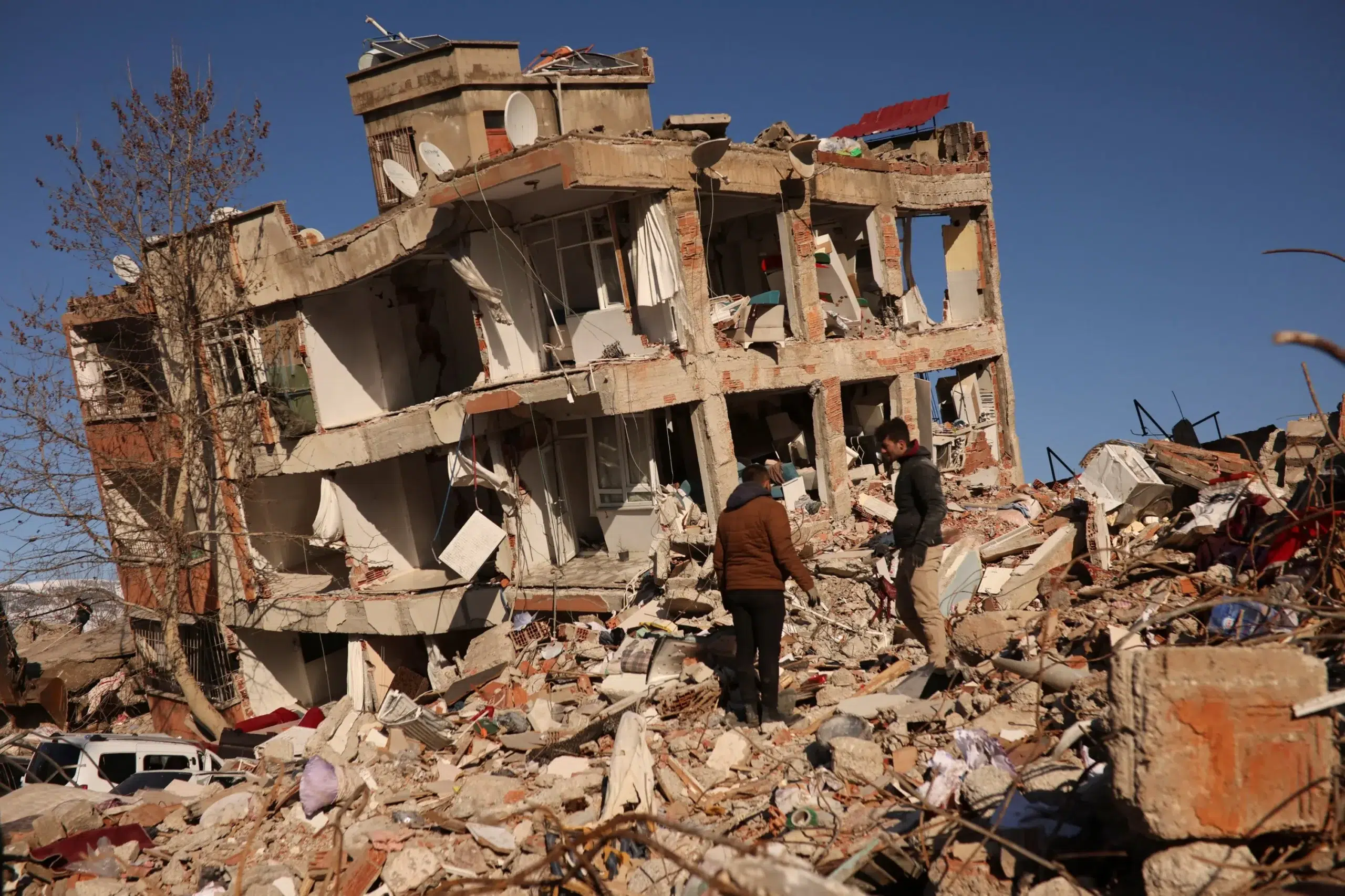
Earthquake Today in Bangladesh & Dhaka Time – Biggest Earthquake History + Alerts, Map & Safety Guide
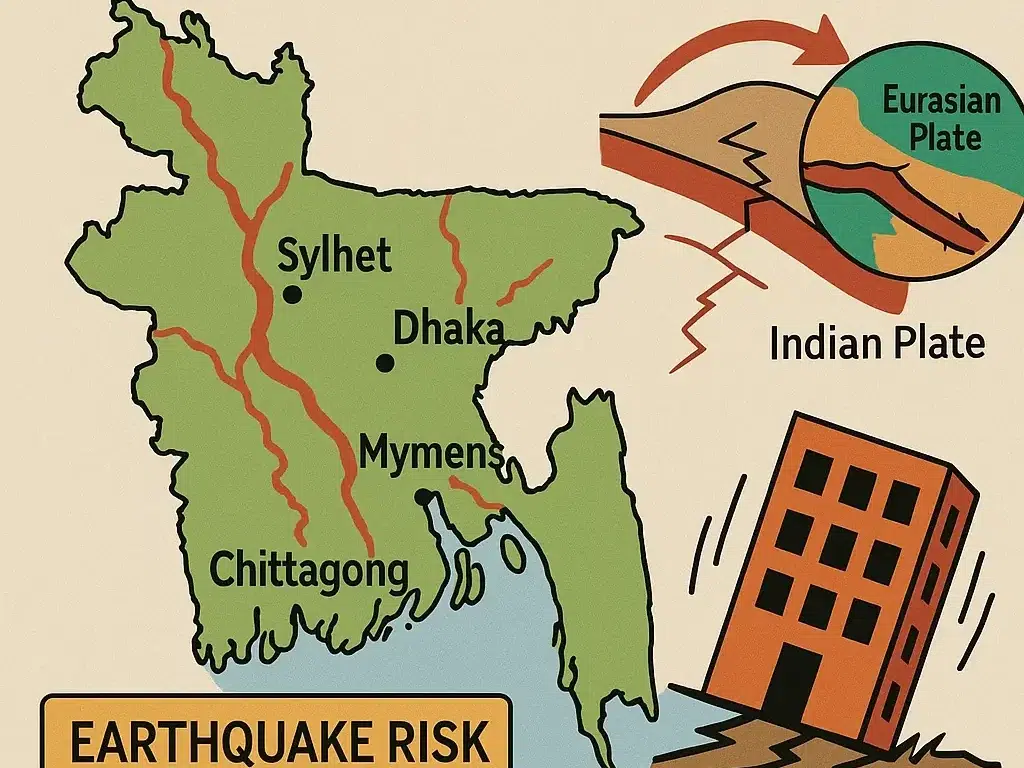
Earthquake today in Bangladesh has increased public concern and search queries like “earthquake today in Dhaka”, “earthquake alert Bangladesh today”, “USGS earthquake Bangladesh” and “earthquake today Bangladesh time”. This guide will help you understand today’s seismic events and prepare for any future shaking — no matter where you live in the world.
What Is an Earthquake?
An earthquake is a sudden shaking of the Earth’s surface caused by the rapid release of energy from within the Earth’s crust. This energy travels as seismic waves and causes the ground to vibrate.
The Earth’s crust is divided into tectonic plates that slowly move. When these plates get stuck or push against each other, stress builds up. Eventually, the stress gets released — often without warning — and that’s what we feel as shaking.
Table of Contents
Why Do Earthquakes Occur?
Tectonic plate interactions
Plates like the Indian Plate and the Eurasian Plate push, slide or collide. These movements cause stress in Earth’s crust
Fault lines and ruptures
Earthquakes frequently occur along fault lines where the Earth’s crust has cracked. When a block of rock suddenly moves, energy is released.
Subduction zones
In places where one plate slides beneath another, large and powerful earthquakes can result — sometimes triggering tsunamis.
Human-induced seismic events
Activities like mining, large-scale reservoir filling, oil & gas extraction and fracking can trigger smaller quakes.
Because of the above, searches such as “earthquake today in Bangladesh map” or “USGS earthquake Bangladesh” show up when people try to understand whether a temblor they felt is part of local risk or global seismic activity.
What Happens During an Earthquake?
When an earthquake strikes:
- Energy is released at a point called the hypocentre, usually at some depth beneath the surface. The point directly above on the surface is called the epicentre.
- The first waves to arrive are P-waves (primary), followed by S-waves (secondary), and finally surface waves, which usually cause the most damage.
- Buildings, roads, pipelines, power lines and gas lines may get damaged.
- After the main shock, aftershocks often follow (smaller quakes that can still cause damage).
People may experience dizziness, fear, panic, or balance issues — especially if the shaking is strong or unexpected.
What Was the Biggest Earthquake in Bangladesh?
According to seismic records, Bangladesh has experienced several significant earthquakes. Some noteworthy ones:
- The earthquake of 1918-07-08 in Kishorganj, Bangladesh, had a magnitude of around Mw 7.2. (Earthquake Track)
- The historical 1762 Arakan earthquake (estimated magnitude 8.5–8.8) affected what is now southeastern Bangladesh and nearby Myanmar. (Wikipedia)
- More recent ones: e.g., the 1997 Chittagong quake (magnitude 6.1) caused damage and casualties in Bangladesh. (Wikipedia)
So when you search “what was the biggest earthquake in Bangladesh?”, you’ll find these historic events — but the magnitude, impact and depth vary widely.
Earthquake Alerts & “Earthquake Today in Bangladesh”
When people sense shaking or hear news of tremors, common searches include:
- Earthquake today in Bangladesh
- Earthquake today in Dhaaka
- Earthquake alert in Bangladesh today
- Earthquake today in Bangladesh map
- USGS earthquake in Bangladesh
- earthquake today, and Bangladesh time
- earthquake Dhaka
These queries reflect both immediate reaction and a desire for factual information: Where and when did it happen? How strong was it? Are we safe?
Important caution: No agency can currently predict exactly when the next major earthquake will occur. So terms like “upcoming earthquake in Bangladesh” may be misleading. Focus instead on real-time monitoring through reputable sources (e.g., USGS) and usual safety measures
Why Do Earthquakes Feel So Sudden?
Several reasons:
- There are no clear visual or audio warnings (unlike storms or hurricanes).
- Seismic waves travel extremely fast — you often go from “normal” to “shaking” in seconds.
- If you are in a tall building or high-rise in a city like Dhaka, the movement is amplified and feels stronger.
- The brain isn’t used to the ground moving under our feet, so fear & adrenaline make the event feel longer.
- When you search “earthquake today in Bangladesh,” you likely weren’t expecting it, increasing the surprise factor.
Global Earthquake Guide (for a Worldwide Audience)
No matter where you live, whether in Bangladesh or elsewhere:
Before
- Secure heavy furniture and shelves.
- Identify safe spots: under strong tables, against interior walls.
- Prepare an emergency kit with water, food, a flashlight, a power bank, a first-aid kit, and a helmet.
- Practice drills: know how to Drop–Cover–Hold On.
During
- If indoors: Drop, Cover, Hold On until shaking stops.
- If outdoors: Move away from buildings, trees, power lines, streetlights — find open space.
- If in a vehicle: Pull over safely, avoid bridges/tunnels, stay inside the car.
- If near the coast: Move to higher ground immediately if you feel a strong quake.
After
- Expect aftershocks — be ready.
- Check for injuries and structural damage (gas leaks, electrical hazards).
- Use phones only foremergencies.y. Keep informed via official channels.
- Avoid damaged buildings. Return only when declared safe.
- Attend to mental and physical health: fear, anxiety and dizziness can follow a quake.
Why This Matters for Bangladesh & Dhaka
Bangladesh, and specifically Dhaka and its surrounding districts, may not always be thought of as the highest-risk region for catastrophic quakes — yet they are vulnerable for several reasons:
- Dense population and many older buildings.
- Soil and sediment that amplify shaking.
- Rapid urban growth sometims haes less adherence to seismic-resistant desig.n.
- When you hear about “earthquake today in Dhaka” and “earthquake alert Bangladesh today”, the urgency is real.
For example, on 21 November 202,5 an earthquake of magnitude around 5.5–5.7 struck central Bangladesh, near Narsingdi and Dhaka, causing casualties and structural damag.e. (Anadolu Ajansı)
Wrap-Up
- Earthquakes cannot be predicted precisely, but their impact can be mitigated through preparation.
- If you or your readers search “earthquake today in Bangladesh” or “earthquake today in Dhaka”, it’s important to have access to reliable, understandable information and actionable safety steps.
- By using this article as a guide, you and your global audience can turn concern into preparation — making sure when the ground shakes, you don’t have to be surprised.
Frequently Asked Questions
Q1: Is a 9.0 earthquake big?
Yes — a magnitude 9.0 releass enormous energy, far larger than many more frequent moderate quake.s.
Q2: Where was the 6.1 earthquake today?
If you see “6.1 earthquake today” in search results, check reputable sources like USGS or local national seismology centres to confirm exact location, depth and whether it occurred in Bangladesh or elsewhere.
Leave a Reply