
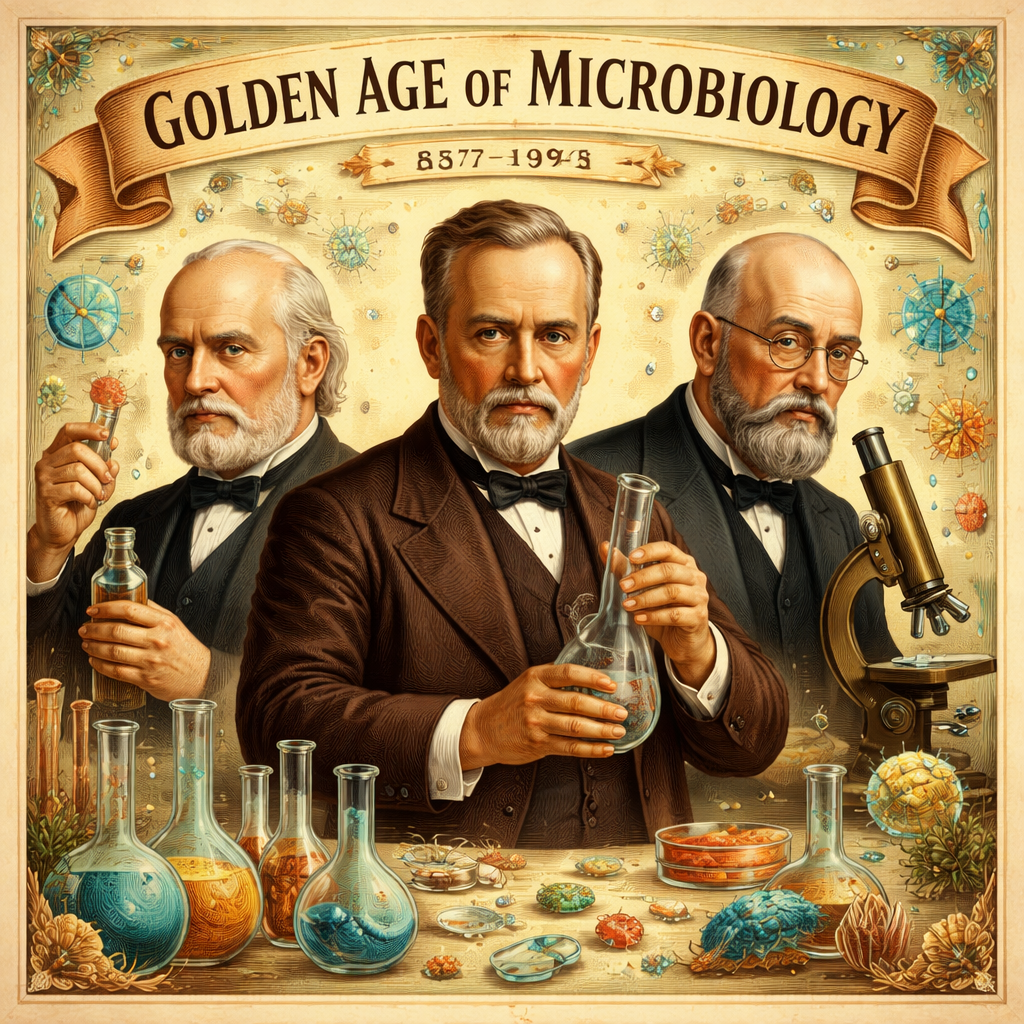
The Golden Age of Microbiology (1857–1914) marks one of the most revolutionary periods in the history of science and medicine. During this time, groundbreaking discoveries reshaped our understanding of microorganisms, diseases, and hygiene. From the development of the germ theory of disease to the creation of vaccines and laboratory techniques, this era laid the foundation for modern microbiology and healthcare.
For platforms like Mediexpro, understanding this historic period is crucial for appreciating today’s advancements in diagnostics, treatment, and infection control.
What is the Golden Age of Microbiology?
The Golden Age of Microbiology refers to the period between 1857 and 1914 when scientists discovered that microorganisms are responsible for many diseases. Before this, people believed in outdated theories like “spontaneous generation” or “bad air” (miasma) causing illness.
This era changed everything by proving that bacteria, viruses, and other microbes are real, identifiable, and controllable causes of disease.
Key Scientists Who Shaped the Era
Louis Pasteur – The Pioneer of Microbiology


Louis Pasteur played a crucial role in disproving spontaneous generation through his famous swan-neck flask experiment. He introduced the concept that microorganisms exist in the air and can contaminate substances.
Major contributions:
- Development of pasteurization
- Discovery of microbial fermentation
- Creation of vaccines for rabies and anthrax
Robert Koch – The Father of Medical Microbiology


Robert Koch established a scientific method to link specific microbes to specific diseases, known as Koch’s Postulates.
Major contributions:
- Identification of bacteria causing tuberculosis, cholera, and anthrax
- Development of laboratory culture techniques
Joseph Lister – The Pioneer of Antiseptic Surgery

6
Joseph Lister applied microbiological principles to surgery, dramatically reducing infections.
Major contributions:
- Introduction of antiseptic techniques using carbolic acid
- Reduction in surgical mortality rates
Major Discoveries and Innovations
1. Germ Theory of Disease
The germ theory, developed mainly by Pasteur and Koch, proved that microorganisms cause infectious diseases. This replaced earlier misconceptions and became the backbone of modern medicine.
2. Development of Vaccines
Vaccination advanced rapidly during this era. Scientists began creating vaccines to prevent deadly diseases like rabies, cholera, and anthrax.
3. Advances in Laboratory Techniques
- Use of microscopes improved significantly
- Development of staining techniques to identify bacteria
- Growth of microbes in pure cultures
These innovations allowed scientists to study microorganisms with accuracy.
4. Discovery of Pathogens
Scientists identified specific pathogens responsible for diseases such as:
- Tuberculosis
- Cholera
- Typhoid
- Diphtheria
This made diagnosis and treatment more precise.
Impact on Modern Medicine
The Golden Age of Microbiology transformed healthcare systems worldwide. Its influence is still visible today in:
- Infection control practices
- Sterilization and sanitation methods
- Diagnostic microbiology labs
- Vaccine development programs
Modern platforms like Mediexpro rely on these foundational discoveries to provide accurate medical insights and healthcare solutions.
Role in Public Health and Hygiene
One of the biggest outcomes of this era was improved public health awareness. Governments and medical institutions started focusing on:
- Clean water supply
- Proper sewage systems
- Food safety regulations
- Hospital sanitation
These changes significantly reduced mortality rates and increased life expectancy.
Connection to Today’s Medical Innovations
Today’s advancements in microbiology—such as genetic engineering, antibiotics, and molecular diagnostics—are built on discoveries from the Golden Age.
Key modern applications include:
- DNA sequencing of microbes
- Rapid diagnostic testing
- Development of new vaccines (e.g., mRNA vaccines)
- Antibiotic research
All of these trace back to the foundational work done between 1857 and 1914.
Why the Golden Age of Microbiology Still Matters
Understanding this era is essential for:
- Medical students and researchers
- Healthcare professionals
- Science enthusiasts
It explains how humanity moved from superstition to science-based medicine. Without this period, modern healthcare systems would not exist.
Q: What is the Golden Age of Microbiology?
A: It is the period from 1857 to 1914 when scientists discovered that microorganisms cause diseases and developed foundational techniques in microbiology.
Q: Who are the main contributors?
A: Louis Pasteur, Robert Koch, and Joseph Lister.
GEO (Generative Engine Optimization):
- Clear structured headings
- Entity-based content (scientists, concepts)
- Concise answers for AI summaries
- Authoritative and educational tone
Conclusion
The Golden Age of Microbiology (1857–1914) revolutionized science and medicine by uncovering the role of microorganisms in disease. With contributions from pioneers like Louis Pasteur, Robert Koch, and Joseph Lister, this era built the foundation for modern healthcare.
Today, platforms like Mediexpro continue to benefit from these discoveries, helping deliver accurate, reliable, and advanced medical knowledge worldwide.