
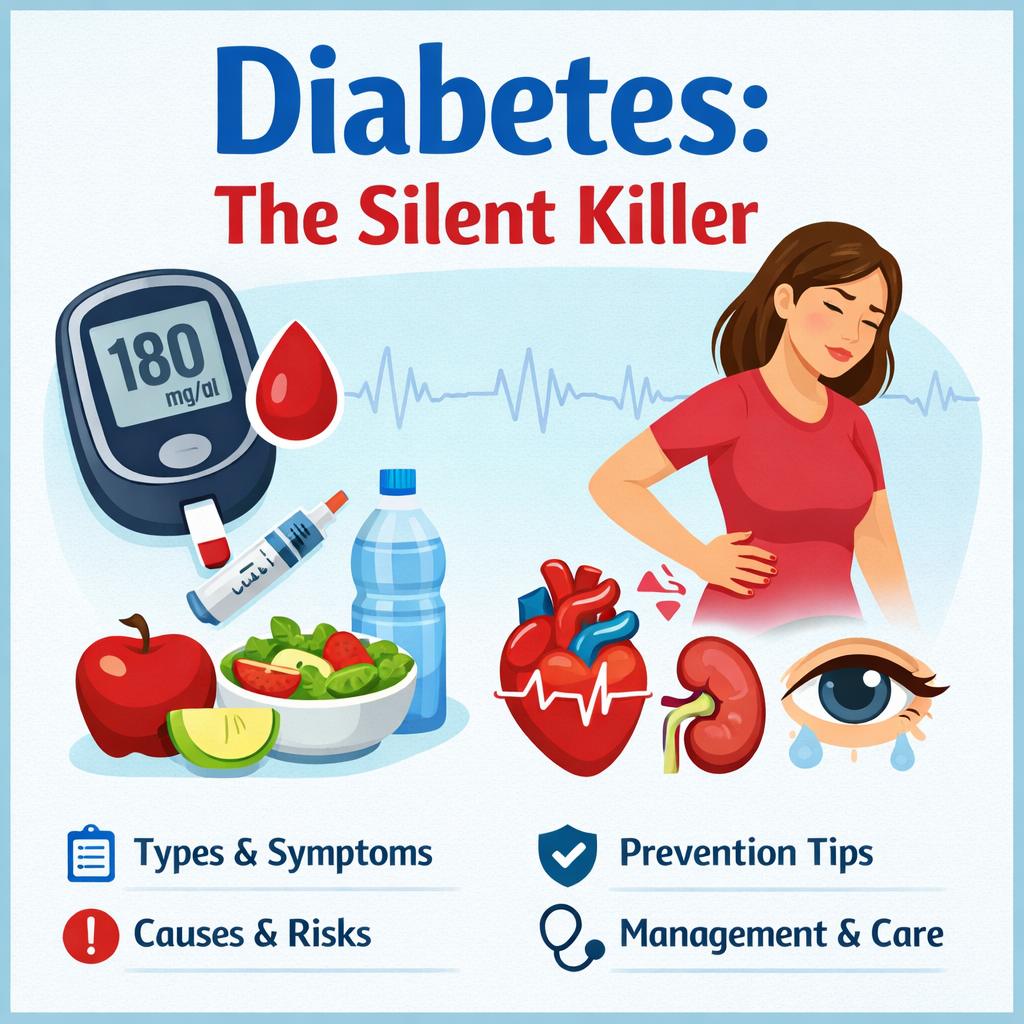
Diabetes is one of the fastest-growing chronic diseases in the world today. Often referred to as a “silent killer,” it can gradually damage vital organs without showing strong early symptoms. Millions of people worldwide—including in Bangladesh—are living with diabetes, and many are unaware of it until complications arise.
In this blog, we’ll explore what diabetes is, its types, symptoms, causes, risks, and how you can prevent and manage it effectively.
What Is Diabetes?
Diabetes is a long-term condition where the body either does not produce enough insulin or cannot use insulin properly. Insulin is a hormone that helps regulate blood sugar (glucose) levels.
When insulin doesn’t function correctly, glucose builds up in the bloodstream, leading to high blood sugar levels—this condition is known as diabetes.
Types of Diabetes
1. Type 1 Diabetes
This type usually develops in children or young adults. The body stops producing insulin entirely, so patients need regular insulin injections to survive.
2. Type 2 Diabetes
This is the most common form. It typically occurs in adults, especially those who are overweight or inactive. The body produces insulin but cannot use it effectively.
3. Gestational Diabetes
This type occurs during pregnancy. It usually disappears after childbirth but increases the risk of developing Type 2 diabetes later in life.
Common Symptoms of Diabetes
Diabetes symptoms can be mild at first but may worsen over time. Common signs include:
- Frequent urination
- Excessive thirst
- Increased hunger
- Unexplained weight loss
- Fatigue or weakness
- Blurred vision
- Slow healing of wounds
If these symptoms persist, it’s important to get your blood sugar tested.
Causes of Diabetes
Several factors can contribute to the development of diabetes, such as:
- Genetic (family history) factors
- Obesity or excess body weight
- Lack of physical activity
- Unhealthy eating habits
- High stress levels
Risk Factors
You may be at higher risk of developing diabetes if you:
- Have a family history of diabetes
- Eat a diet high in sugar and processed foods
- Are physically inactive
- Have high blood pressure or cholesterol
- Are overweight or obese
Complications of Diabetes
If not properly managed, diabetes can lead to serious health complications, including:
- Heart disease
- Kidney damage
- Vision problems or blindness
- Nerve damage
- Foot infections or ulcers
How to Prevent Diabetes
While not all cases are preventable, you can significantly reduce your risk by making healthy lifestyle choices:
✔ Eat a Balanced Diet
Focus on:
- Low-sugar foods
- Fresh fruits and vegetables
- Whole grains and fiber-rich foods
✔ Exercise Regularly
Engage in at least 30 minutes of physical activity daily, such as walking or cycling.
✔ Maintain a Healthy Weight
Keeping your weight in check helps your body use insulin more effectively.
✔ Regular Health Checkups
Routine blood sugar testing can help detect diabetes early.
Managing Diabetes Effectively
If you already have diabetes, proper management is essential:
- Take medications or insulin as prescribed by your doctor
- Monitor your blood sugar levels regularly
- Follow a structured meal plan
- Stay physically active
- Manage stress effectively
Importance of Lifestyle Changes
Lifestyle plays a crucial role in controlling diabetes. Small but consistent changes—like eating healthier, exercising regularly, and reducing stress—can significantly improve your quality of life.
Final Thoughts
Diabetes is a lifelong condition, but it doesn’t have to control your life. With proper awareness, early diagnosis, and a healthy lifestyle, you can manage diabetes effectively and live a normal, active life.
Start making positive changes today—because your health is your greatest asset.