
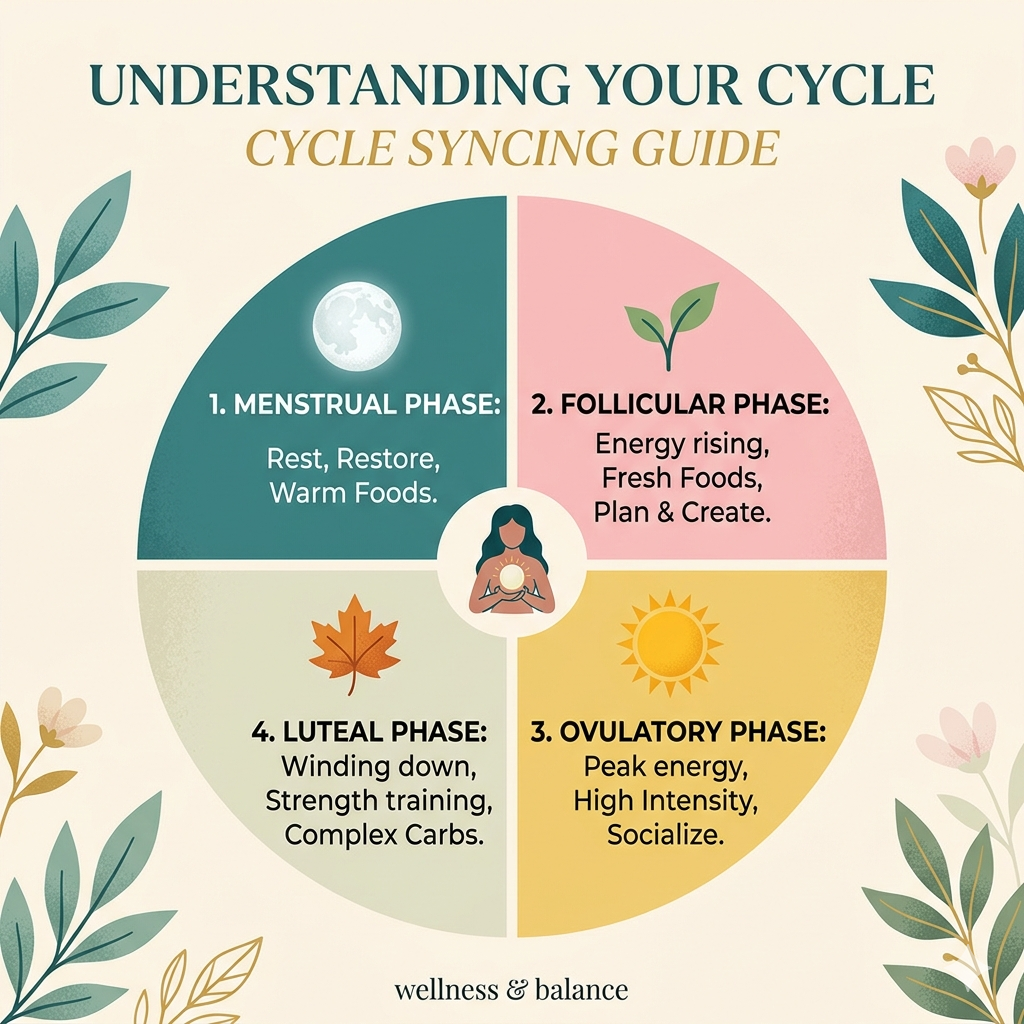
Have you ever noticed that some weeks you feel like a literal superhero—full of energy, social, and productive—only to find yourself completely exhausted, irritable, and craving chocolate the following week?
You aren’t “crazy,” and your productivity isn’t failing. You are simply experiencing the natural ebb and flow of your hormones. Welcome to the world of Cycle Syncing.
What is Cycle Syncing?
Cycle syncing is the practice of aligning your diet, exercise, and lifestyle habits with the four distinct phases of your menstrual cycle. Instead of pushing yourself to perform at the same level every single day, cycle syncing allows you to work with your body’s chemistry rather than against it.
By understanding your hormonal shifts, you can optimize your energy, clear your skin, improve your mood, and even reduce PMS symptoms.
Phase 1: The Menstrual Phase (The “Winter” Season)
Duration: Days 1–5 (approximate) Hormone Status: Estrogen and Progesterone are at their lowest.
This is the start of your cycle. Your body is shedding the uterine lining, which requires significant energy. You may feel turned inward, tired, and in need of rest.
Diet: Focus on Remineralizing
Since you are losing blood, it is crucial to replenish iron and zinc.
- Foods to eat: Leafy greens, beets, kelp, kidney beans, and grass-fed beef.
- Comfort: Warm soups, stews, and herbal teas (like raspberry leaf) are excellent for soothing cramps.
Exercise: Gentle Movement
Your energy is at its lowest. This is not the time for a marathon or heavy lifting.
- Best activities: Yin yoga, light stretching, or short walks. Rest is a productive activity during this phase.
Phase 2: The Follicular Phase (The “Spring” Season)
Duration: Days 6–10 (approximate) Hormone Status: Estrogen begins to rise; Testosterone is low but increasing.
As your follicles prepare an egg for release, your energy begins to climb. You’ll start feeling more creative, social, and ready to take on new projects.
Diet: Light and Fresh
Support your rising estrogen with fermented foods that help your liver metabolize hormones efficiently.
- Foods to eat: Sauerkraut, kimchi, broccoli, sprouts, carrots, and light grains like quinoa.
- Focus: Think fresh salads and lean proteins.
Exercise: Try Something New
This is the best time to experiment with new workout classes.
- Best activities: Hiking, light jogging, or dance cardio. Your stamina is increasing, but you aren’t at your peak yet.
Phase 3: The Ovulatory Phase (The “Summer” Season)
Duration: Days 11–17 (approximate) Hormone Status: Estrogen peaks; Testosterone levels rise.
This is your “superwoman” phase. You are most fertile, most communicative, and likely feel the most confident. Your libido is often at its highest during these few days.
Diet: Anti-inflammatory & Cooling
With hormones peaking, your body temperature rises slightly. Support your liver in clearing out the excess estrogen.
- Foods to eat: Raw vegetables, fruits (berries, citrus), almonds, and salmon.
- Tip: Avoid heavy, greasy foods that might make you feel sluggish during your peak energy window.
Exercise: High Intensity
Your energy and strength are at their absolute maximum.
- Best activities: HIIT (High-Intensity Interval Training), heavy weightlifting, or spinning classes. You’ll recover faster and feel more powerful now.
Phase 4: The Luteal Phase (The “Autumn” Season)
Duration: Days 18–28 (approximate) Hormone Status: Progesterone rises to its peak; Estrogen dips then rises slightly before both crash.
This is the longest phase and often the most challenging. Progesterone has a calming effect but can also cause “brain fog” or sluggishness. As hormones drop toward the end, PMS symptoms often kick in.
Diet: B-Vitamins and Slow Carbs
Your metabolism actually speeds up during this phase, meaning you need more calories (around 200–300 extra).
- Foods to eat: Roasted root vegetables (sweet potatoes, squash), dark chocolate (for magnesium), bananas, and brown rice.
- Focus: Complex carbohydrates help stabilize blood sugar and prevent mood swings.
Exercise: Strength and Flow
During the first half, you might still have energy for strength training. In the second half, scale back.
- Best activities: Pilates, power walking, or strength training with moderate weights. Avoid extreme cardio if you feel the onset of PMS.
Why You Should Start Cycle Syncing Today
- Reduced PMS: By eating the right nutrients in the Luteal phase, you can drastically reduce bloating and mood swings.
- Increased Productivity: Stop scheduling high-stakes meetings during your Menstrual phase and move them to your Ovulatory phase.
- Balanced Weight: Working out according to your hormones prevents cortisol spikes that lead to stubborn belly fat.
- Better Skin: Mapping your skincare to your cycle helps manage hormonal acne before it starts.
How to Get Started
The first step is tracking. Use an app or a journal to note which day of your cycle you are on and how you feel. Once you know your rhythm, start by changing one thing—perhaps just your workouts—and see how your body responds.
Final Thoughts
Cycle syncing isn’t about perfection; it’s about awareness. When you stop fighting your biology and start flowing with it, you unlock a level of health and harmony you never thought possible.