
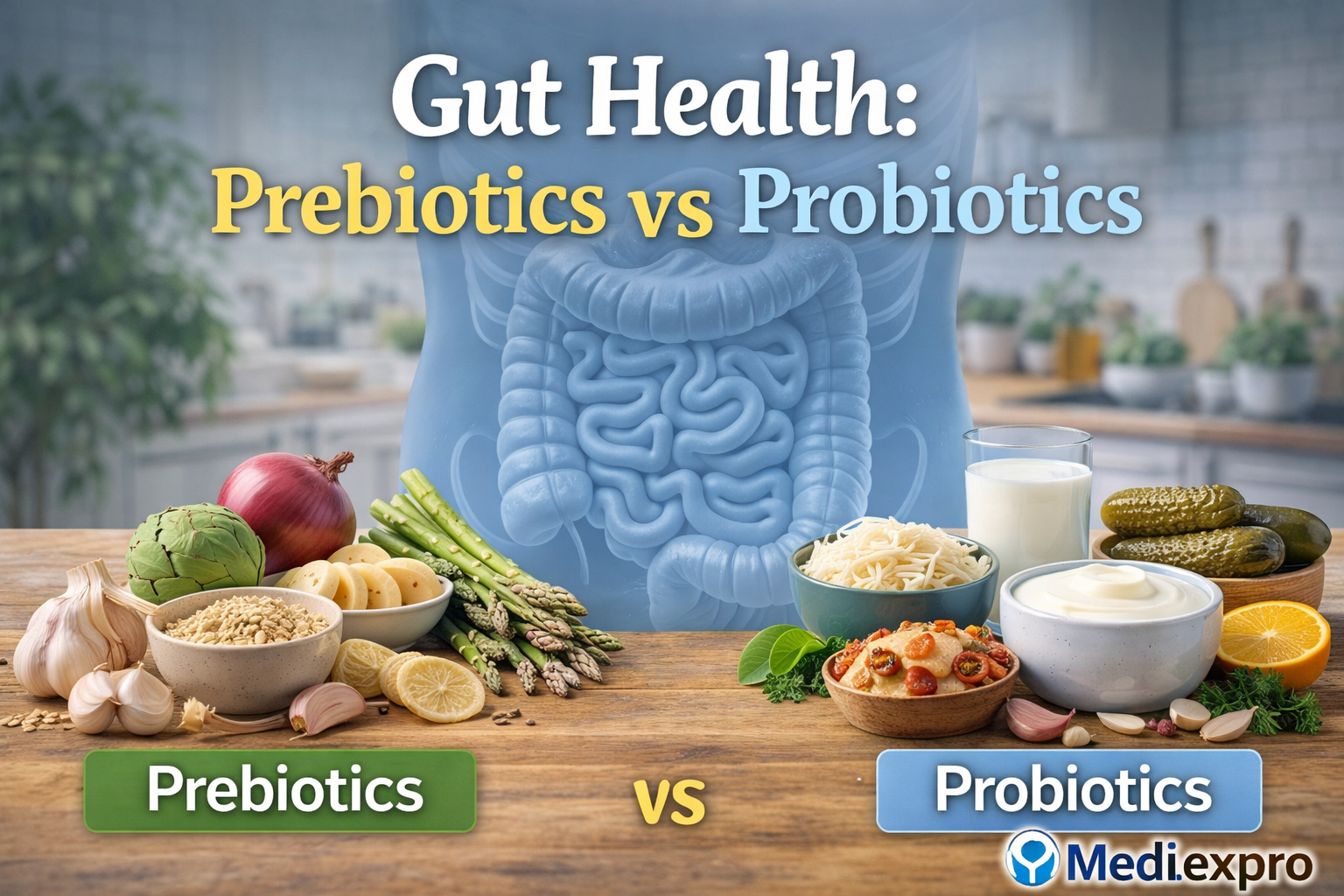
Gut health has become one of the most discussed topics in modern wellness — and for good reason. A healthy gut not only supports digestion but also influences immunity, mental health, metabolism, and overall well-being. When talking about gut health, two important terms often appear: prebiotics and probiotics.
Although they sound similar, they serve different roles in maintaining a balanced gut microbiome. In this article, we’ll break down the differences between prebiotics and probiotics, their benefits, food sources, and how to include them in your daily diet.
What Is Gut Health?
Your gut contains trillions of microorganisms, including bacteria, fungi, and other microbes. This complex ecosystem is called the gut microbiome. When the microbiome is balanced, it helps:
- Digest food efficiently
- Absorb nutrients
- Support immune function
- Protect against harmful bacteria
- Improve mental health through the gut-brain connection
When this balance is disrupted (a condition called dysbiosis), it may lead to digestive issues, inflammation, weakened immunity, and even mood changes.
What Are Probiotics?
Probiotics are live beneficial bacteria that help restore and maintain a healthy balance in the gut. Think of them as the “good bacteria” that improve your digestive system.
Benefits of Probiotics
- Improve digestion
- Reduce bloating and gas
- Support immune function
- Help manage diarrhea
- May improve symptoms of IBS
- Enhance nutrient absorption
Natural Food Sources of Probiotics
- Yogurt with live cultures
- Kefir
- Sauerkraut
- Kimchi
- Miso
- Tempeh
- Fermented pickles
How They Work
Probiotics add more good bacteria to your gut, helping crowd out harmful bacteria and reduce inflammation.
What Are Prebiotics?
Prebiotics are non-digestible fibers that feed the good bacteria in your gut. They act as fuel for probiotics.
If probiotics are the “good bacteria,” prebiotics are their “food.”
Benefits of Prebiotics
- Stimulate growth of beneficial bacteria
- Improve digestion
- Support immune health
- Enhance calcium absorption
- Help regulate blood sugar
- Promote bowel regularity
Natural Food Sources of Prebiotics
- Garlic
- Onions
- Leeks
- Asparagus
- Bananas (especially slightly green)
- Oats
- Apples
- Chicory root
How They Work
Prebiotics pass through your digestive system without being broken down. Once they reach the colon, beneficial bacteria ferment them, producing short-chain fatty acids that support gut health.
Prebiotics vs Probiotics: Key Differences
| Feature | Probiotics | Prebiotics |
|---|---|---|
| What they are | Live beneficial bacteria | Non-digestible fibers |
| Main role | Add good bacteria | Feed good bacteria |
| Found in | Fermented foods | Fiber-rich plant foods |
| Function | Improve microbiome balance | Promote growth of healthy bacteria |
Why You Need Both
For optimal gut health, you need both prebiotics and probiotics. Taking probiotics without feeding them properly may limit their effectiveness. Prebiotics create the ideal environment for probiotics to thrive.
This combination is sometimes called synbiotics, which refers to products or meals containing both.
Example: Yogurt (probiotic) topped with banana slices (prebiotic).
Signs Your Gut May Need Support
You might benefit from improving your gut health if you experience:
- Frequent bloating
- Constipation or diarrhea
- Weak immune system
- Fatigue
- Sugar cravings
- Skin problems
- Mood swings
Improving your diet with prebiotic and probiotic foods can often help restore balance naturally.
The Gut-Brain Connection
Did you know your gut is often called the “second brain”? The gut produces neurotransmitters like serotonin, which influence mood and mental health. An unhealthy gut may contribute to anxiety and depression.
Balanced gut bacteria supported by prebiotics and probiotics can positively impact emotional well-being.
How to Add Prebiotics and Probiotics to Your Daily Diet
Morning Routine
- Yogurt with oats and banana
- Smoothie with kefir and berries
Lunch Ideas
- Salad with onions and asparagus
- Sandwich with fermented pickles
Dinner Ideas
- Stir-fry with garlic and leeks
- Miso soup with vegetables
Snacks
- Apple slices
- Handful of almonds
- Fermented vegetables
Supplements: Are They Necessary?
While food is the best source, supplements can help in certain cases:
- After antibiotic use
- Chronic digestive issues
- IBS
- Frequent infections
However, it’s best to consult a healthcare professional before starting probiotic supplements.
Lifestyle Tips for Better Gut Health
- Eat a diverse diet
- Reduce processed and sugary foods
- Drink plenty of water
- Exercise regularly
- Manage stress
- Get enough sleep
Gut health isn’t just about food — lifestyle plays a major role too.
Common Myths About Prebiotics and Probiotics
Myth 1: They Are the Same Thing
They are different but complementary.
Myth 2: More Is Always Better
Excessive intake can cause bloating or discomfort.
Myth 3: Supplements Are Better Than Food
Whole foods provide additional nutrients and fiber.
Final Thoughts
Understanding the difference between prebiotics and probiotics is key to building a strong digestive system. Probiotics introduce beneficial bacteria, while prebiotics nourish and support their growth. Together, they create a balanced and thriving gut microbiome.
By including fermented foods and fiber-rich plant foods in your daily diet, you can naturally improve digestion, strengthen immunity, and even enhance your mood.
Remember, gut health is a long-term investment. Small consistent dietary changes can lead to big improvements in overall wellness.